


ERC refund processing continued this week, but the underlying data points to further deterioration rather than progress.
The IRS processed a measly 44 refunds totaling $7.53M, but that figure is materially inflated by a single $4M refund, which accounted for more than half of the total dollar volume. This large refund masked what was otherwise a very light processing week and the second lowest on record.
Not surprisingly, the average days from filing to refund increased again to 720 days, marking the longest processing timeline on record in the TaxNow data set. This trend likely reflects the IRS’s prioritization of its oldest and most delayed refund claims, rather than improved throughput across the broader ERC population.
Nearly all refunds observed this week appear to have been previously “stuck” refunds finally released, rather than newly worked claims. That distinction matters. It suggests the IRS is still focused on clearing administrative debris (e.g., statute reviews) rather than meaningfully reducing the ERC backlog.
On the enforcement front, denials remain limited and no new audits have been posted since the 11 examinations initiated in December. However, we are now beginning to see IDRs (Letter 6612) tied to audit codes that were first posted in late 2025, indicating the IRS is slowly re-engaging with a portion of its stale examination inventory.
At the same time, the clock continues to run on two-year statutes tied to summer 2024 denials. While there are early signals that the IRS may be exploring a procedural fix via Form 907, there is still no confirmed or scalable solution in place.
Total refunds: 44, down sharply from 141 last week.
Total dollar volume: $7.53M, more than half driven by a single $4M refund
Average refund: $171,220, artificially inflated by the $4M outlier, but up from last week’s $115,020
Average days from filing to refund: 720, the longest on record—and still rising (up from 707 last week)
Denials: 7, down from 12 last week.
Audits: 0; no new audits since December.
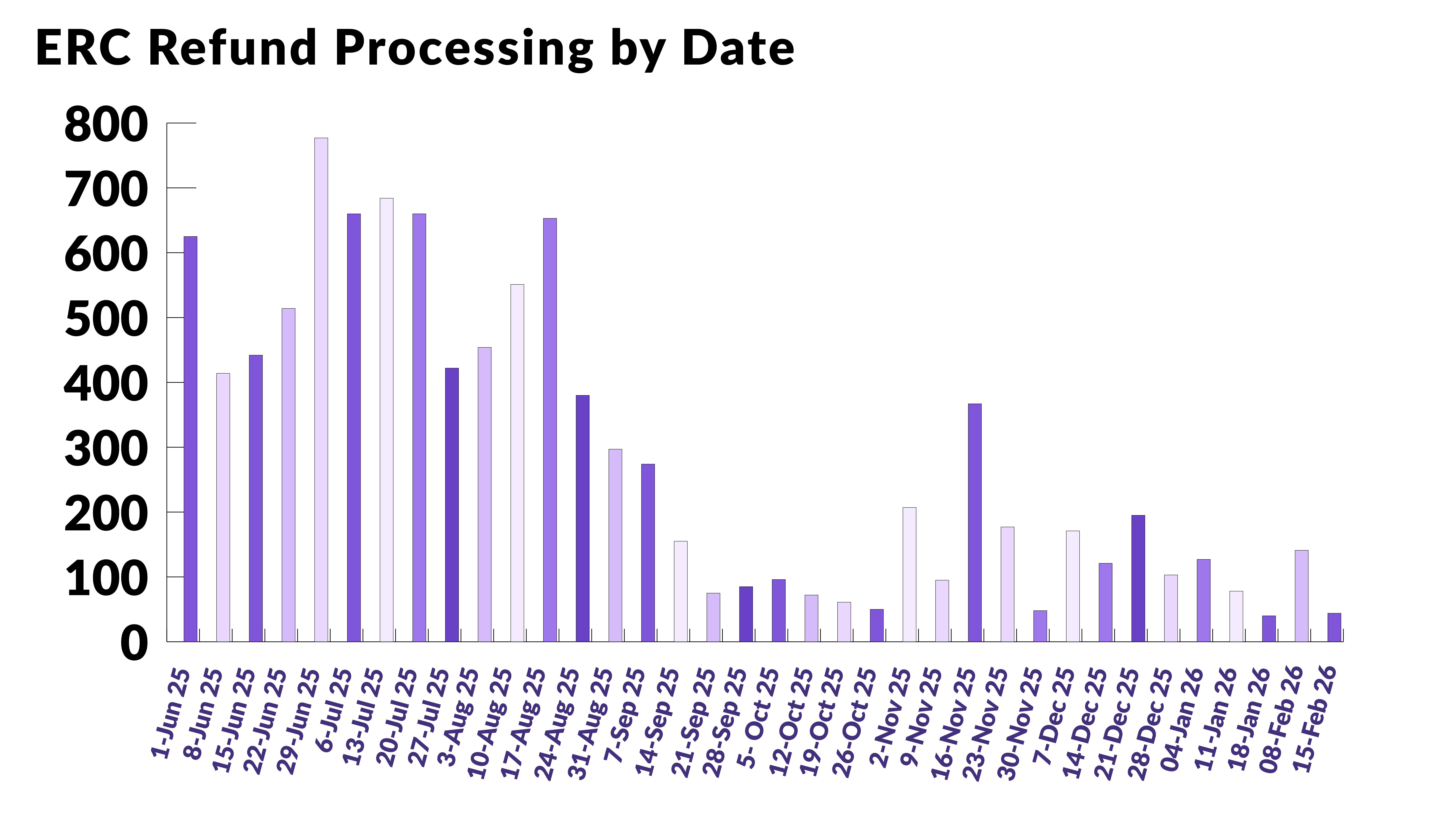
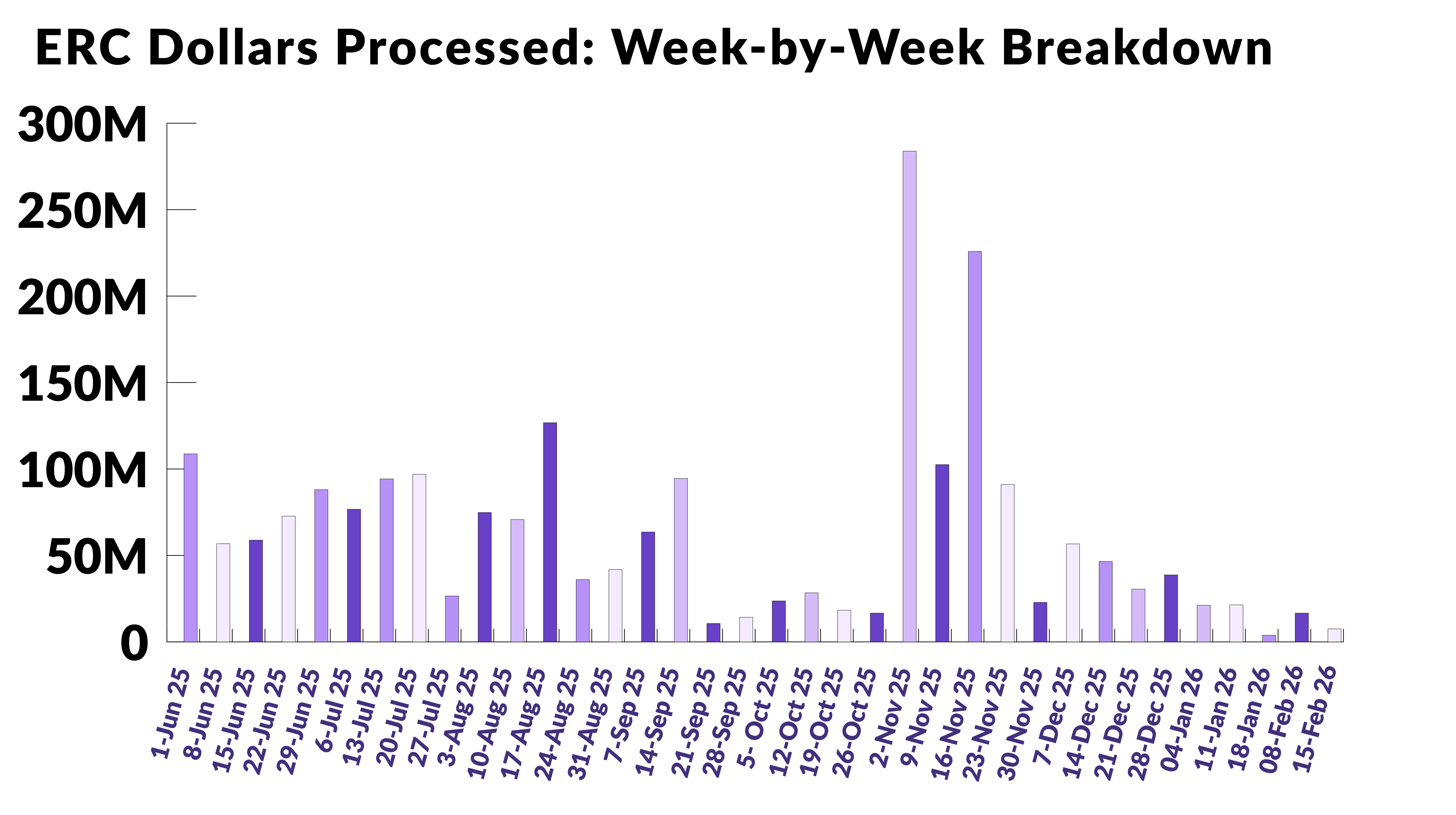
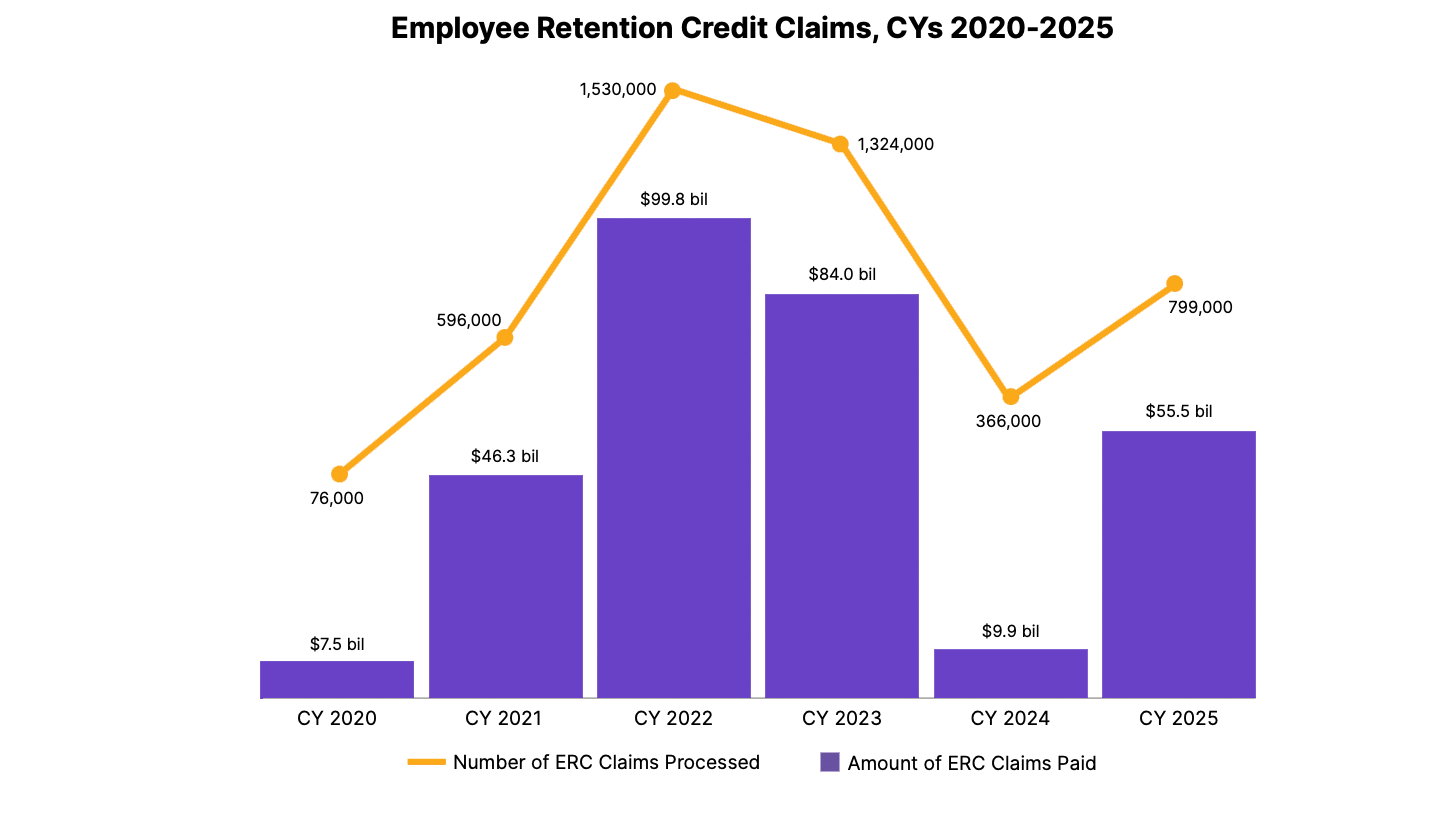
The Taxpayer Advocate Service’s most recent Annual Report to Congress reinforces that these ERC delays are not transitional, they are structural.
TAS formally identified amended returns, including Forms 941-X, as the IRS’s most serious operational problem, citing prolonged delays driven by manual transfers between IRS functions, poor transparency, and limited automation for business claims. For cases sent to Exam, TAS documented average cycle times of 435 to 572 days, even before Appeals involvement.
That finding is directly consistent with what we continue to observe in ERC processing.
More troubling, TAS emphasized the growing risk around two-year statutes following claim disallowances. Many IRS disallowance notices fail to clearly explain appeal rights, Form 907 options, or the precise deadline to preserve refund rights. As a result, taxpayers may permanently lose the ability to pursue a refund through no fault of their own.
TAS confirmed that the IRS has already rejected hundreds of ERC protests simply because the two-year clock expired, and warned that tens of thousands more may be at risk as summer 2024 denials approach their statutory deadline in 2026.
While the IRS has made progress automating certain individual amended returns, TAS made clear that business amended returns, including ERC claims, remain largely manual, and any meaningful scalability gains are likely still months or years away.
Noteworthy Statistic: “[A]approximately 41,000 ERC claims remain in Exam or Compliance awaiting review or examination.”
TaxNow's Take:
This week’s data is difficult to view as anything other than disappointing.
Refund counts fell sharply, processing timelines worsened again, and reported dollar volume was heavily distorted by a single outlier. The fact that most observed refunds were long-stuck cases finally released underscores that new throughput remains constrained.
Enforcement pressure has not escalated, but that offers little comfort as time, not audits or denials, is increasingly the dominant risk. With average processing now stretching to 720 days, and two-year statutes quietly approaching for older denials, procedural failure is becoming the defining feature of the ERC landscape.
Bottom line: activity exists, but progress does not. Until volume increases and the IRS addresses statute-driven risk head-on, the timing forecast of putting ERC in the rear-view remains bleak.
Signing off,
Kenny Dettman, CPA
Kenny Dettman, CPA
Disclaimer: *𝘋𝘢𝘵𝘢 𝘴𝘦𝘵 𝘪𝘴 𝘧𝘳𝘰𝘮 𝘢𝘱𝘱𝘳𝘰𝘹𝘪𝘮𝘢𝘵𝘦𝘭𝘺 15,000 𝘣𝘶𝘴𝘪𝘯𝘦𝘴𝘴𝘦𝘴 𝘵𝘳𝘢𝘤𝘬𝘪𝘯𝘨 𝘌𝘙𝘊*

