


This week’s data showed an uptick in refunds and average check size, but that’s not the story that matters.
ERC activity remains well below normal levels and continues to be driven primarily by special situations, not broad-based claim processing. We did see a modest increase in resolved 105C and 106C cases, including one large ~$800K Q3 2021 partial suspension claim.
But zooming out, the system still isn’t moving in a way that would suggest meaningful progress on the broader backlog.
The most important development this week came from the National Taxpayer Advocate’s announcement of a “streamlined” process for submitting Form 907 requests.
At a high level, the message is simple and critical: The two-year refund suit clock is running on denied claims.
And if that clock runs out, taxpayers risk losing their ability to pursue a refund entirely.
The IRS’s response is to offer a more centralized way to submit Form 907 (Agreement to Extend the Time to Bring Suit), primarily through the Document Upload Tool (DUT).
This is directionally helpful…but let’s not overstate it.
Functionally, this is only marginally different from what should already exist:

And based on what we’re seeing, that’s not something to take for granted.
We fully expect continued rejections of Form 907 submissions for technical or arbitrary reasons; things like formatting discrepancies (e.g., “March 2028” vs. “03/2028”), routing issues, or internal handling delays.
So while the “streamlined” label sounds reassuring, the operational reality is unchanged: Practitioners still need to treat Form 907 as a high-risk, time-sensitive process that requires active management…not passive submission.
Total Refunds: 93 (vs. 59 — up 34 / +58%)
Total Dollar Volume: $12.56M (vs. $3.18M — up $9.38M / +295%)
Average Refund: $135,116 (vs. $53,931 — up ~$81K / +151%)
Average Days from Filing to Refund: 636
Denials: 17 (vs. 2 — up 15, an abnormal spike)
New Audits: 0 (no change)
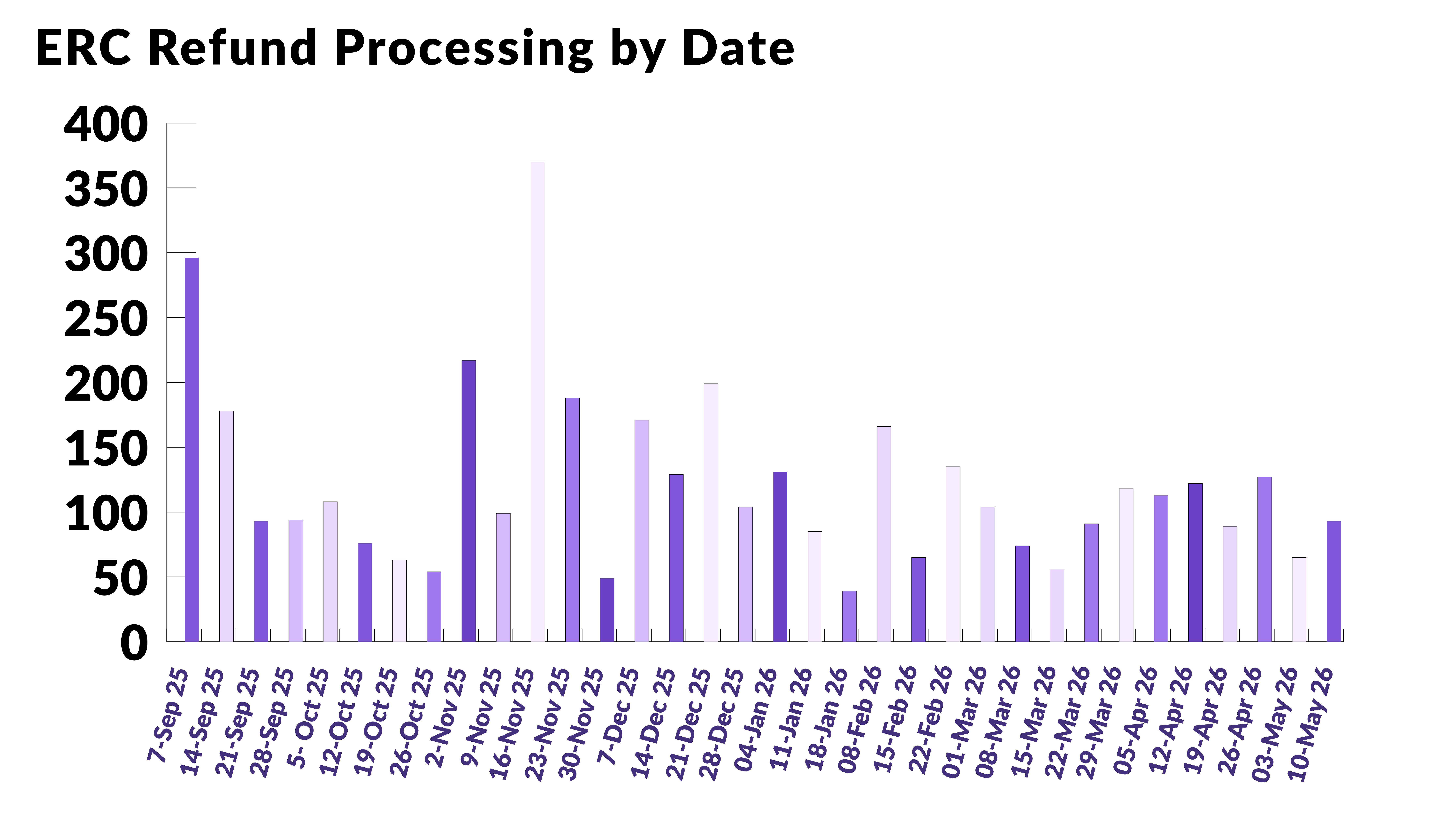
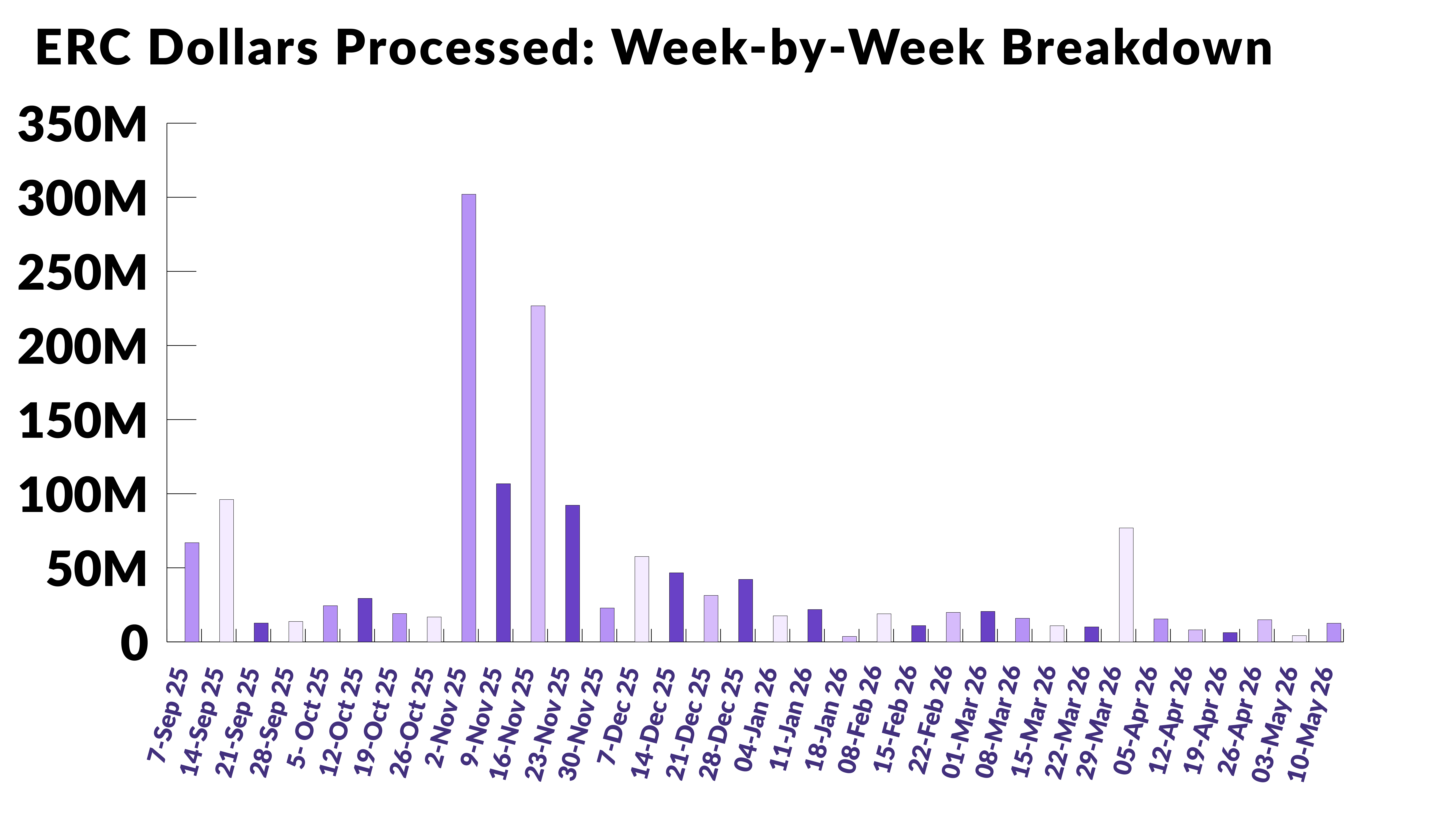
This week’s numbers don’t change the trajectory.
ERC is still being worked at the margins, denials are ticking up, and meaningful processing remains limited.
What has changed is the urgency.
The IRS just made it clear: the clock is real.
And the current “solution” still depends on the same system that created the backlog in the first place.
Disclaimer: *𝘋𝘢𝘵𝘢 𝘴𝘦𝘵 𝘪𝘴 𝘧𝘳𝘰𝘮 𝘢𝘱𝘱𝘳𝘰𝘹𝘪𝘮𝘢𝘵𝘦𝘭𝘺 15,000 𝘣𝘶𝘴𝘪𝘯𝘦𝘴𝘴𝘦𝘴 𝘵𝘳𝘢𝘤𝘬𝘪𝘯𝘨 𝘌𝘙𝘊*

