


TaxNow’s ERC blog took last week off while Kenny migrated north in the van from Florida to Cape Cod. And much like the weather many of us dealt with over Memorial Day Weekend, the ERC forecast remains gray, soggy, and not particularly inspiring.
The good news? You didn’t miss a sudden breakthrough.
The bad news? You also didn’t miss a sudden breakthrough.
Meanwhile, the more important story continues to shift away from refund counts and toward administrative process issues: Form 907 extensions, CP320B letters, missing protests, inconsistent Appeals procedures, and continued uncertainty around PEO claims.
So while the data continues to get quieter, the procedural problems are still noisy.
Total Refunds: 55 (vs. 43 — up 12 / +28%)
Total Dollar Volume: $4.2M (vs. $5.3M — down $1.1M / -21%)
Average Refund: $76,034 (vs. $123,639 — down ~$47.6K / -39%)
Average Days from Filing to Refund: 683 (vs. 756 — down 73 days)
Denials: Data remains unavailable due to ongoing TC 290 transcript reporting issues
New Audits: 0 in May, although PEO-related examination activity continues to surface anecdotally
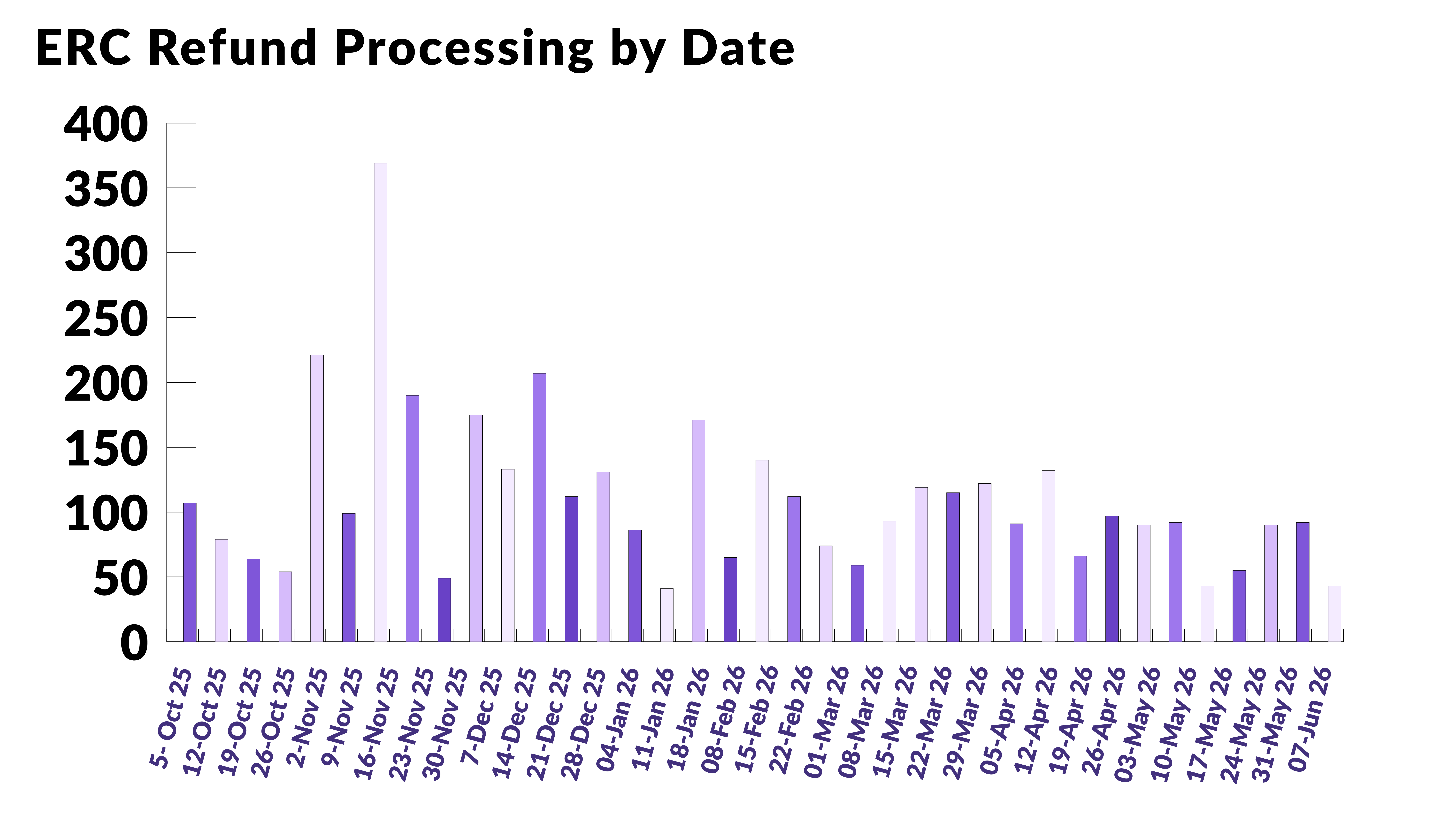
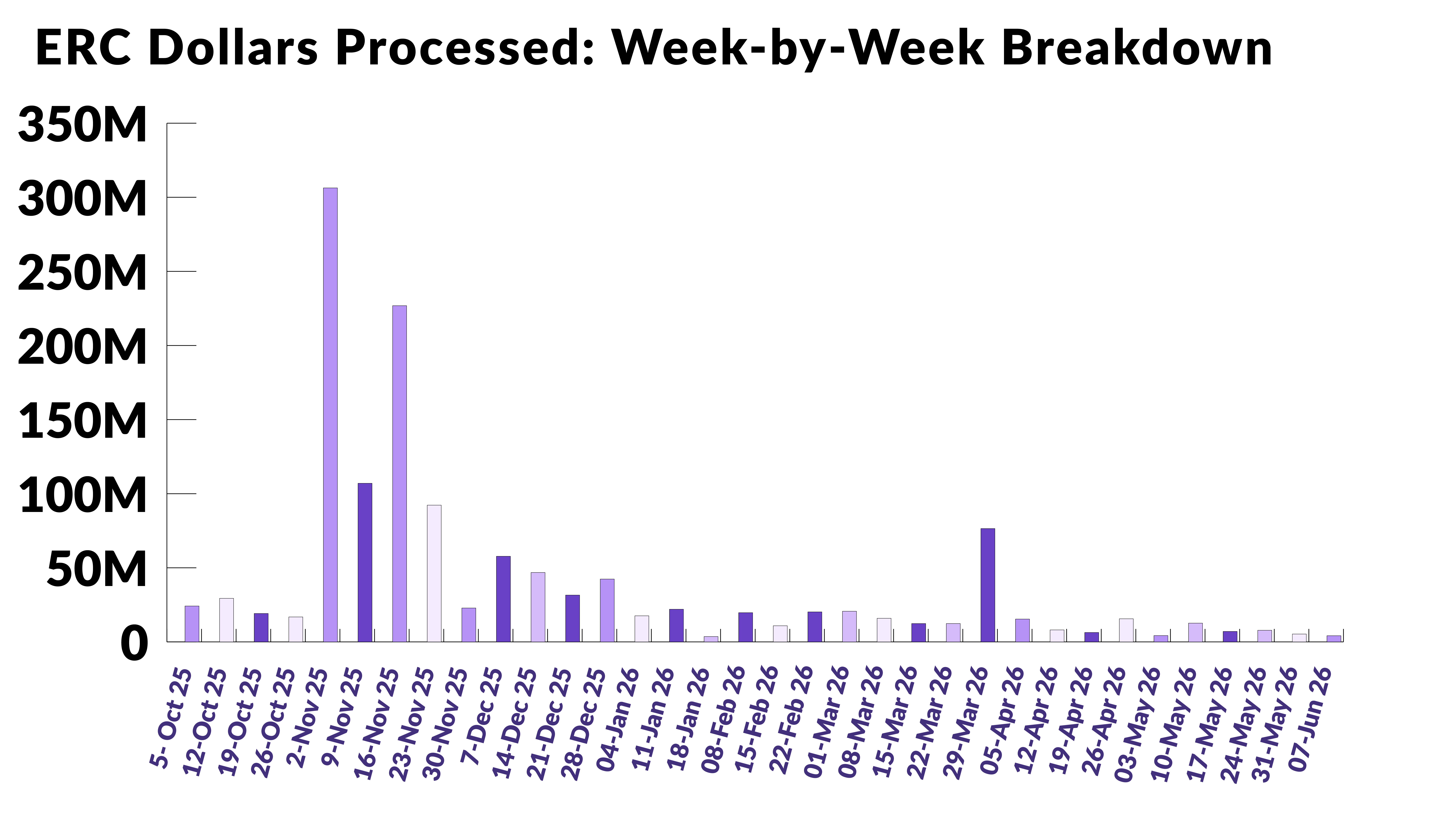
“One of the more important developments we are now seeing is the anticipated wave of CP320B letters being issued to taxpayers who previously received 105C ERC denial letters.
The CP320B letters are tied to the IRS’s Form 907 “streamlined” process, which is intended to help taxpayers extend the two-year statute of limitations to file suit after a notice of disallowance.
As suspected, the process does not look especially streamlined.
Based on what we are seeing, the QR code on the CP320B appears to send taxpayers to a general DUT landing page, rather than a taxpayer-specific or claim-specific portal. If that is correct, then there may be little practical benefit to waiting for a CP320B before submitting a Form 907 request, especially if a taxpayer is already within six months of the statute expiration date.
For taxpayers with 105C denials, the two-year refund suit deadline can become very real, very quickly. If the IRS is not actually creating a uniquely linked, taxpayer-specific Form 907 workflow through the CP320B, then the CP320B may be more of a reminder than a prerequisite.
We are also hearing reports that some Form 907 requests are being quickly denied because the IRS is claiming that no protest is on file, even where a protest was previously sent.
That creates a frustrating but important dynamic.
On one hand, the Form 907 process may help taxpayers confirm whether the IRS has actually logged their protest.
On the other hand, it may also expose yet another operational issue: protests that were timely submitted but not properly associated, processed, or recognized by the IRS.
For taxpayers and advisors, the takeaway is simple: documentation matters. Certified mail receipts, fax confirmations, copies of protests, and follow-up correspondence may become increasingly important as these cases move deeper into Appeals, statute-extension requests, and potential refund litigation timelines.
We continue to hear reports of dramatic inconsistencies in IRS Appeals outcomes and procedures.
Some taxpayers appear to be receiving very different treatment on similar ERC issues. Others are reporting difficulty obtaining meaningful explanations of Appeals’ reasoning. We are also hearing that Appeals may be denying informal requests for copies of Appeals Closing Memoranda (ACMs), despite IRM procedures that require those documents to be available in appropriate circumstances.
This is an area where a more unified and coordinated effort may be needed.
If taxpayers and representatives are seeing the same procedural breakdowns across cases, this may be the type of issue that warrants broader elevation, including through the Taxpayer Advocate Service or IRS Systemic Advocacy.
PEO-related ERC activity remains difficult to read.
We continue to hear about both sporadic refunds and IRS examinations involving PEO structures. But the signals remain fragmented. There is enough activity to keep paying attention, but still not enough clarity to declare a clean trend.
For now, the PEO story remains exactly where it has been for several weeks: active, uneven, and still developing.
Not much changed while we were away.
“Special situations” refunds are still moving, but at a snail’s pace. The bigger story remains procedural.
The “streamlined” Form 907 process does not yet look especially streamlined. CP320B letters may be helpful as reminders, but they do not appear to create a uniquely linked taxpayer process. Missing or unlogged protests may become a major source of friction. And Appeals continues to produce inconsistent experiences for taxpayers and representatives.
So, much like Memorial Day Weekend weather, the ERC forecast remains mostly clouds, scattered confusion, and only the occasional break of sun.
We’ll keep watching the radar.
Disclaimer: *𝘋𝘢𝘵𝘢 𝘴𝘦𝘵 𝘪𝘴 𝘧𝘳𝘰𝘮 𝘢𝘱𝘱𝘳𝘰𝘹𝘪𝘮𝘢𝘵𝘦𝘭𝘺 15,000 𝘣𝘶𝘴𝘪𝘯𝘦𝘴𝘴𝘦𝘴 𝘵𝘳𝘢𝘤𝘬𝘪𝘯𝘨 𝘌𝘙𝘊*

