


It’s been a relatively quiet week in non-processing-related headlines, as well as a sleepy week from an ERC processing standpoint.
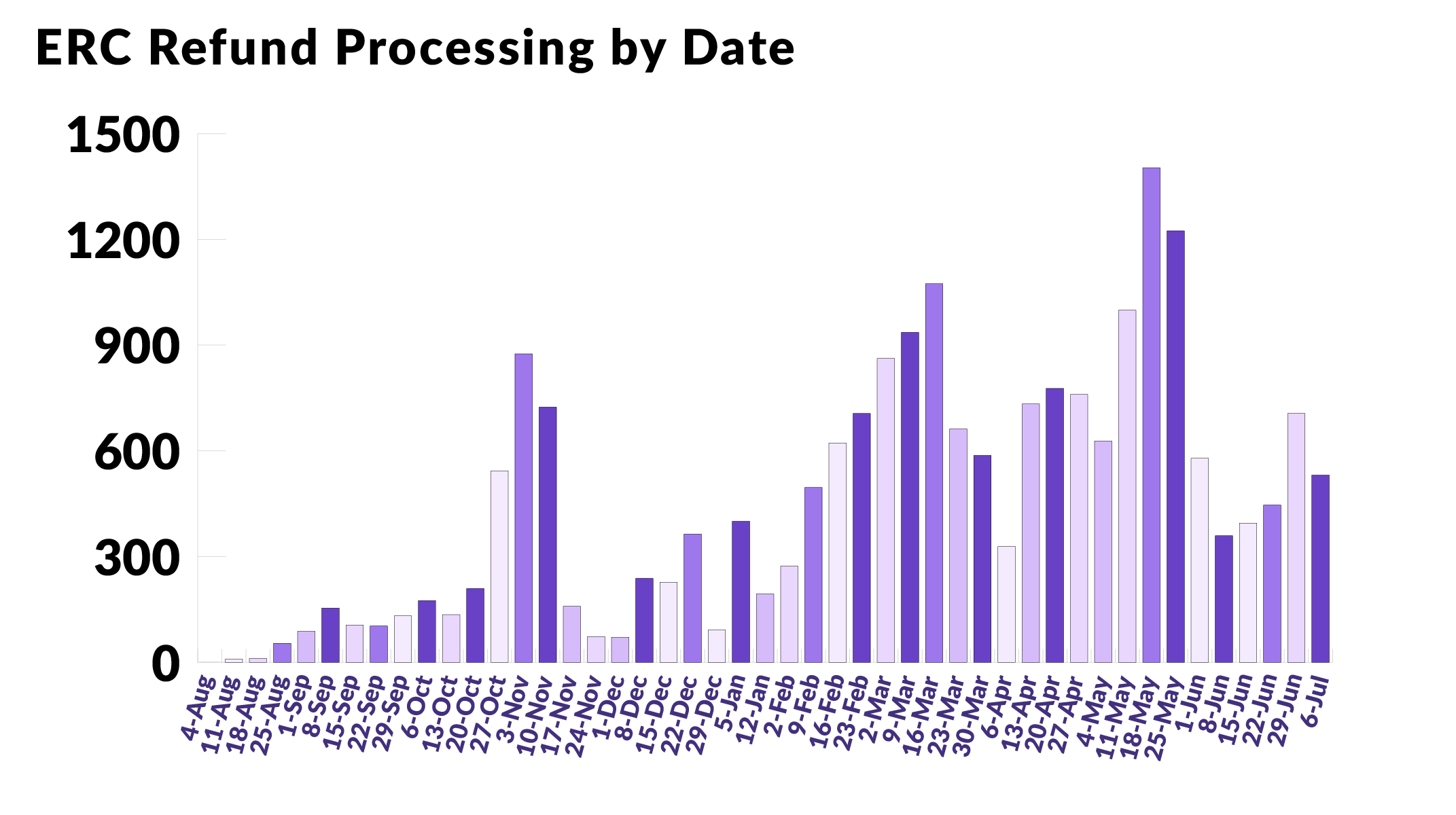
📉 Our latest TaxNow data shows that refunds processed slipped to 524, down from last week’s 712. That’s a sharp 26% decline, suggesting that we’ve still got a very long way to go if this pace we’ve experienced over the past month or so continues.
📈 But here’s some modest silver lining: the average refund amount has slightly improved to $136,930 from the previous week’s $131,706. It’s the first uptick in over a month, which could be a good sign for mid-sized claims.
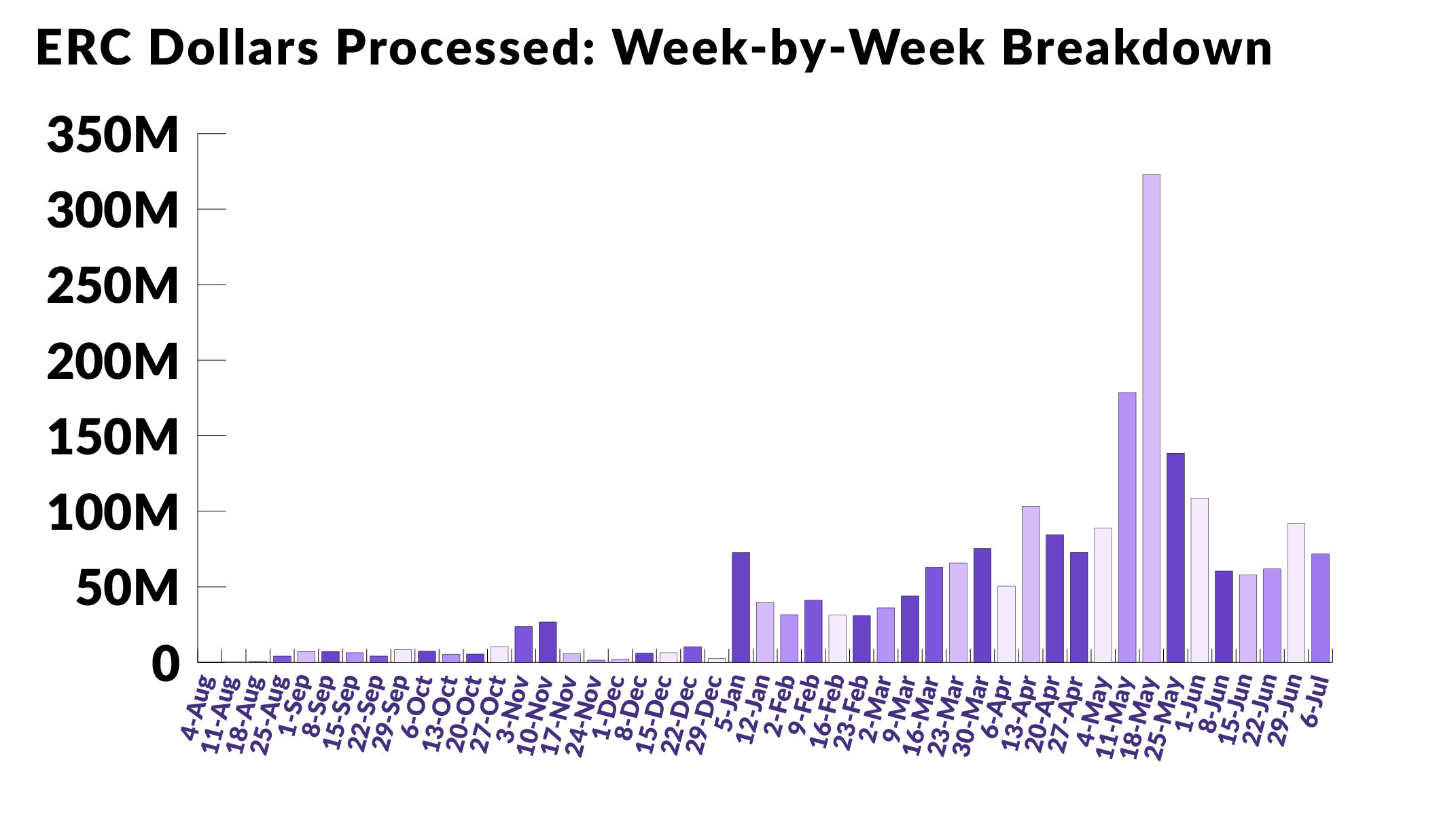
📉 Overall, we saw a major hit to the total dollar volume, which decreased to $71.8M, down from last week’s $93.8M. While that’s a sizable drop, this week’s volume still surpasses 3 of the past 5 weeks.

1. Trump Says, “No one goes on vacation until [OBBB] is done” - Republicans are scrambling to push President Trump’s “One Big Beautiful Bill,” packed with tax cuts and policy changes, over the finish line before the July 4th recess. However, the Senate parliamentarian just tossed out several key provisions (think land sales, SNAP limits, and immigration measures) for breaking budget rules, and forcing last-minute edits. Meanwhile, internal GOP fights over the SALT deduction cap and Medicaid cuts are slowing things down. With the clock ticking, more than a few senators are now wondering if this bill will actually beat the fireworks.
2. Senate GOP Uses New Math to Drastically Cut Tax Bill Price Tag - Senate Republicans have unveiled a tax bill estimated to cost $441 billion using a novel "current policy baseline," a method that assumes expiring tax cuts will be extended, unlike the traditional $3.8 trillion cost under current law accounting, which includes a modest $1.6 billion pay-for related to the ERC provisions. This unprecedented scoring move slashes the price tag of major provisions like Trump-era tax cuts and business deductions, drawing sharp criticism from Democrats who say it masks the true cost of the legislation. The GOP argues the approach reflects fiscal reality and avoids counting expected tax hikes as new revenue, while Senate Democrats plan to challenge its legitimacy in the reconciliation process. Meanwhile, House Republicans may demand equivalent spending cuts if the true cost exceeds $4 trillion, putting intra-party pressure on the final package.
3. Federal Court Backs IRS ERC Guidance as Valid Interpretive Rule - A federal judge in Arizona upheld the IRS’s 2021 guidance on employee retention credit (ERC) eligibility, ruling that it qualifies as an interpretive rule and didn’t require a notice-and-comment period under the Administrative Procedure Act. The court rejected arguments from consulting firm Stenson Tamaddon LLC that the notice improperly altered statutory criteria and imposed new obligations on employers. Judge Steven Logan concluded the IRS was merely clarifying ambiguous statutory language and acted within its authority during a time of urgent need for guidance. While acknowledging the close legal questions involved, the court emphasized that interpretive rules need not carry legal force to be valid and enforceable.
4. Taxpayer Advocate Set to Launch Modern Case System, Phoenix, This Summer - The IRS’s Taxpayer Advocate Service (TAS) is preparing to roll out a new case management platform, Phoenix, this summer to replace its outdated 20-year-old system, TAMIS. The upgrade, built on Salesforce and featuring integrated tools like real-time calendars and task lists, is designed to streamline workflows and reduce reliance on manual processes. According to a recent TIGTA report, TAS’s current system has contributed to delays and inefficiencies amid rising caseloads, with 50,000 more cases in FY 2024 than in 2020. While TAMIS will remain available for records, Phoenix is expected to enhance case resolution speed and lay the groundwork for future improvements, including a potential customer-facing portal.
Kenny's Conclusions
While ERC headlines may be on the quieter side this week, the steady flow of new IRS activity, from examination spikes to ongoing legal rulings, reminds us there’s still plenty of movement behind the scenes. With processing rates dipping and average time to refund creeping upward, patience remains the name of the game for many waiting on their ERC claims. We’ll be keeping a close watch on processing trends (and on Capitol Hill) as July kicks off. Stay tuned for more updates in next week’s edition!
Signing off!
Kenny Dettman, CPA
Disclaimer: *𝘋𝘢𝘵𝘢 𝘴𝘦𝘵 𝘪𝘴 𝘧𝘳𝘰𝘮 𝘢𝘱𝘱𝘳𝘰𝘹𝘪𝘮𝘢𝘵𝘦𝘭𝘺 13,000 𝘣𝘶𝘴𝘪𝘯𝘦𝘴𝘴𝘦𝘴 𝘵𝘳𝘢𝘤𝘬𝘪𝘯𝘨 𝘌𝘙𝘊*
