


For much of the ERC program, the weekly question has been straightforward: How many refunds did the IRS issue?
That question is becoming increasingly less relevant every week.
While refund processing continues at a sluggish pace, the more consequential developments are now happening outside the IRS altogether. Federal and district courts continue issuing decisions that are steadily redefining what it takes for taxpayers to prevail on an ERC claim. Taken together, these rulings are making one thing increasingly clear: surviving the IRS’ administrative backlog may no longer be the hardest part of obtaining an ERC refund: Winning in IRS appeals or Federal or District court may be.
For taxpayers whose claims remain unresolved after years of waiting, the path forward is narrowing. Administrative processing has slowed to a crawl, Appeals inventories remain significant, and litigation is becoming the final forum for many claims. Unfortunately for those taxpayers, recent judicial decisions continue to favor the government.
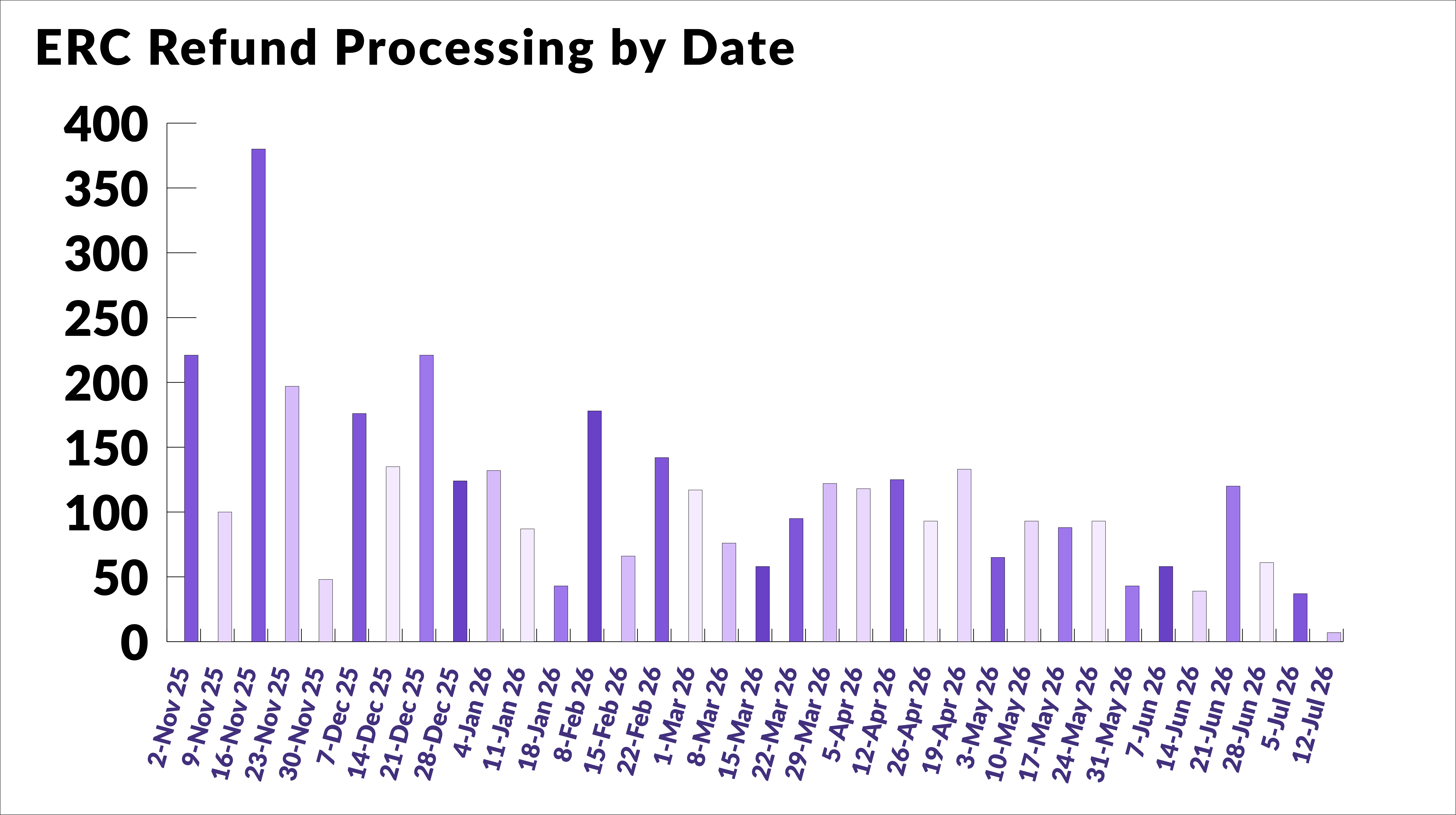
Total Refunds: 37 (vs. 15 — up 22 / +147%)
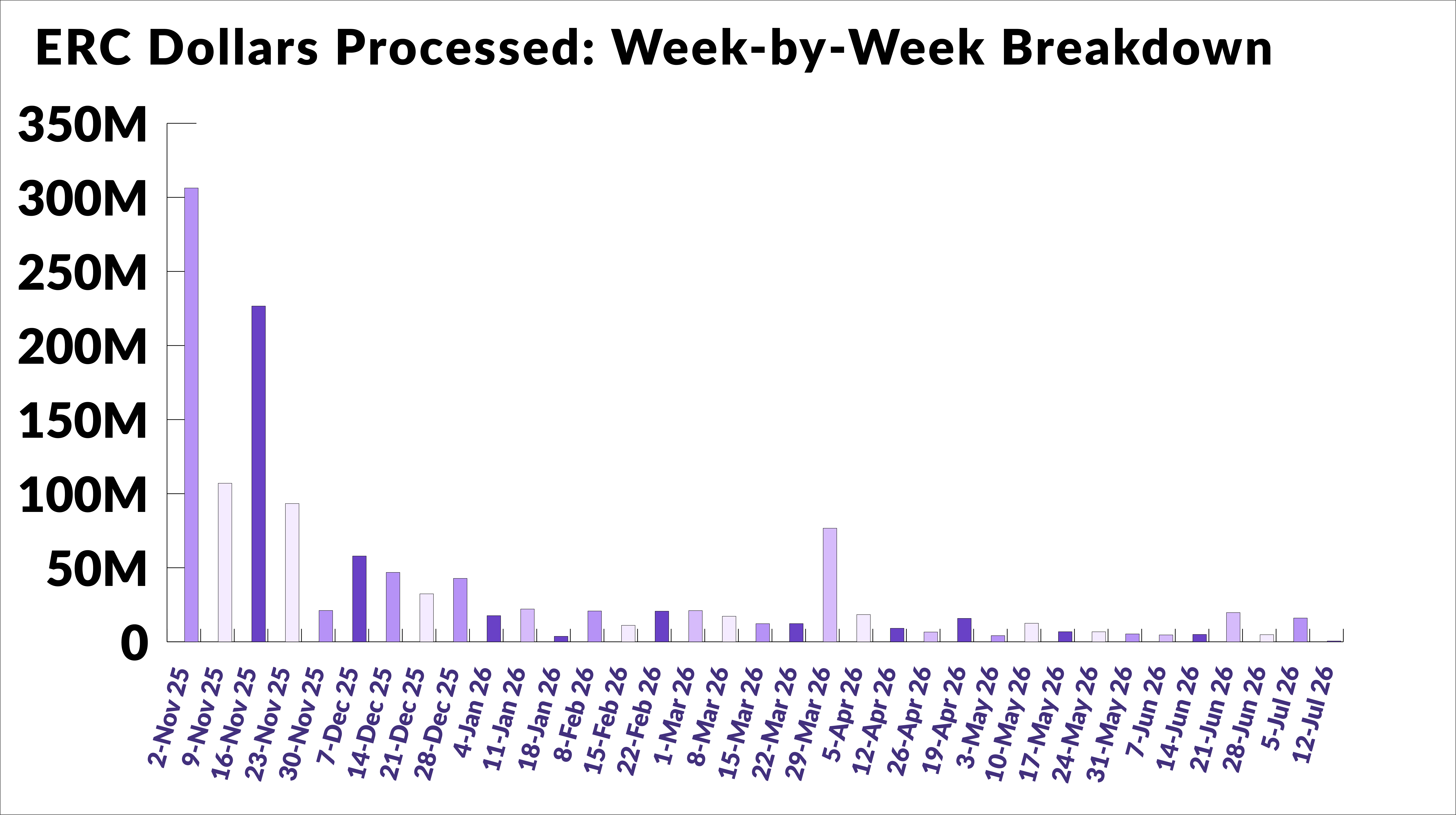
Total Dollar Volume: $16.04M (vs. $9.4M — up $6.64M / +71%)
Average Refund: $86,771 (vs. $630,842 — down approximately $544K / -86%)
Average Days from Filing to Refund: 735 (vs. 630 — increased by 105 day)
Denials: 3 (vs. 4 — down 25%)
New Audits: 0 in June
Recent decisions continue sending the same message: general pandemic-related business challenges alone are not enough to qualify for the ERC.
In Tapestry Senior Housing Management, the court dismissed an ERC refund suit after finding that the taxpayer failed to identify the specific government orders that allegedly suspended its operations. Likewise, RAAM Construction held that staffing shortages, quarantines, and project delays were insufficient without proof that a qualifying government order directly caused the operational suspension.
The trend continued in Sundancer Pools, where the court emphasized that a government order,not simply the broader effects of COVID-19.must be the proximate cause of the suspension. Meanwhile, Key Meetings upheld the retroactive filing deadline for certain third-quarter 2021 ERC claims, reinforcing that procedural requirements remain just as important as substantive eligibility.
Together, these decisions continue narrowing the path for taxpayers pursuing ERC refunds through litigation.
The litigation trend is unfolding against a backdrop of continued administrative uncertainty.
Practitioners continue reporting inconsistent experiences during IRS Exam and Appeals, including varying documentation requests, changing positions throughout the review process, and delays that complicate planning for taxpayers approaching refund litigation deadlines.
PEO-filed claims remain particularly difficult to navigate. Questions surrounding consolidated filings, refund ownership, interest calculations, and communication between the IRS, PEOs, and client businesses continue to create uncertainty for taxpayers seeking resolution.
As more claims move beyond ordinary processing, comprehensive documentation becomes increasingly critical. Taxpayers pursuing Appeals or litigation are likely to need a record that clearly identifies the relevant government order, explains the affected business activity, and demonstrates precisely how that order resulted in a qualifying suspension.
In light of evolving case law, ERC is entering a different phase.
For many years, the ERC program was defined by processing delays, refund backlogs, and the question of when the IRS would finally act. Today, that question is becoming less central or relevant. As refund activity slows and more disputes move beyond the administrative process, the courts are increasingly shaping the future of unresolved claims.
The next chapter of the ERC will be defined less by the number of refund checks the IRS issues and more by the legal precedent that determines which claims ultimately survive. GODSPEED!
Disclaimer: *𝘋𝘢𝘵𝘢 𝘴𝘦𝘵 𝘪𝘴 𝘧𝘳𝘰𝘮 𝘢𝘱𝘱𝘳𝘰𝘹𝘪𝘮𝘢𝘵𝘦𝘭𝘺 15,000 𝘣𝘶𝘴𝘪𝘯𝘦𝘴𝘴𝘦𝘴 𝘵𝘳𝘢𝘤𝘬𝘪𝘯𝘨 𝘌𝘙𝘊*

