


This week’s biggest ERC development did not come from TaxNow’s refund data, another wave of approvals, or even new case law. It came from the IRS itself.
The IRS recently updated its ERC page and reported that, as of the week ending July 4, 2026, it has approximately 20,000 remaining ERC claims in various stages. Those stages include 3,000 claims under review, 4,100 pending payment or disallowance, 5,200 under audit, 6,100 awaiting review of disallowance responses, and 1,600 with the Independent Office of Appeals.
The macro data confirms the micro data observed by TaxNow, and the progress is, well, micro.
The published inventory declined by only 600 claims over roughly five weeks, or about 120 net claims per week. If this pace holds, it would take 3 more years to clear the inventory!!!
The more important point is where the claims are sitting. The number of claims awaiting review of disallowance responses actually increased. The number in Appeals did not move. The pending payment or disallowance bucket also increased slightly. The lines between PEO and non-PEO stats remain entirely blurred.
Here’s the full picture of progress (or lack thereof) from the IRS:

The TaxNow data tells a similar story of limited progress…
Total Refunds: 47 (vs. 37 — up 10 / +27%)
Total Dollar Volume: $6.4M (vs. $16.04M — down $9.64M / -60%)
Average Refund: $136,387 (vs. $86,771 — up approximately $49.6K / +57%)
Average Days from Filing to Refund: 619 (vs. 735 — improved by 116 days)
Denials: 3 (vs. 2)
New Audits: 0 in June
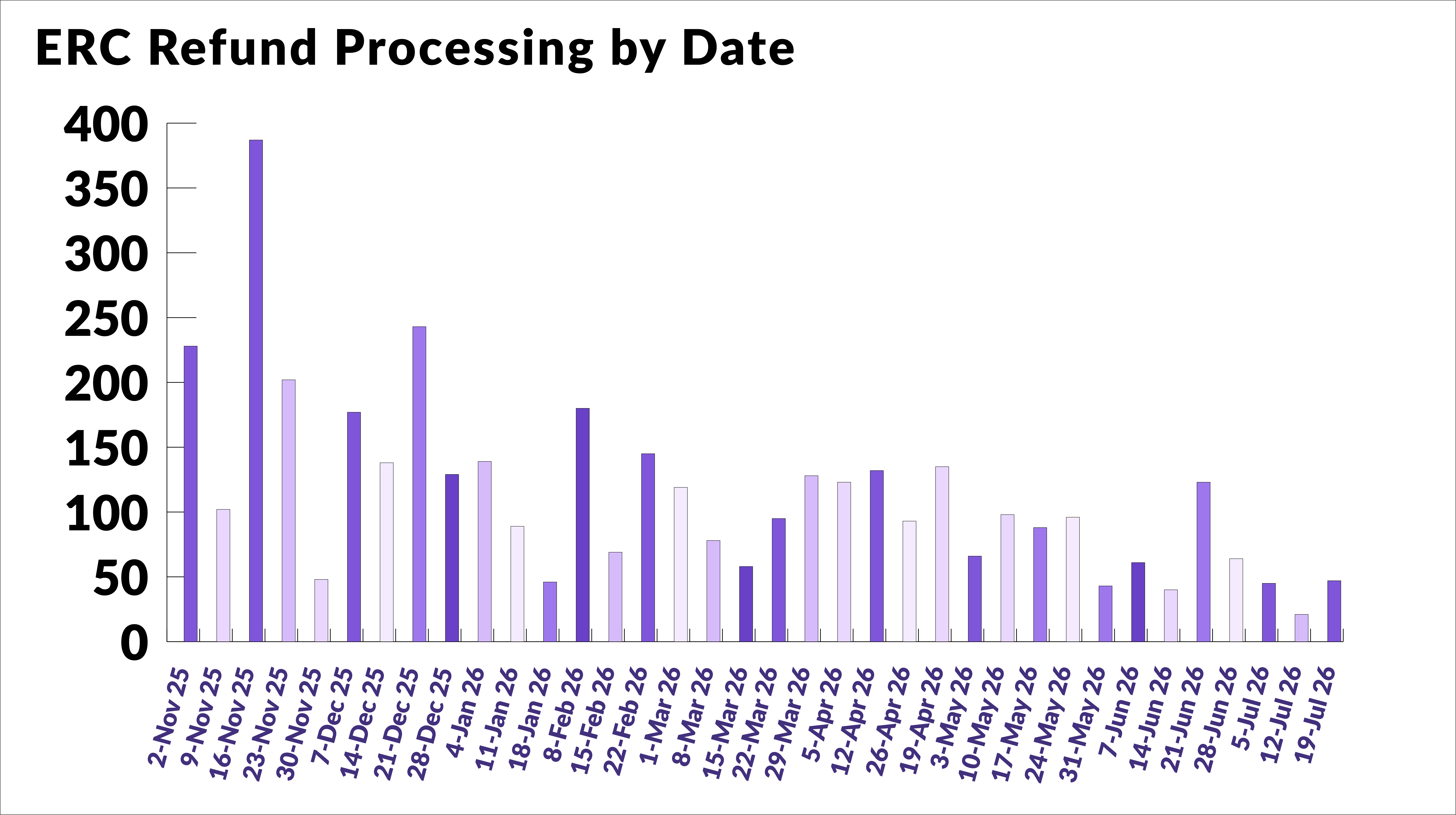
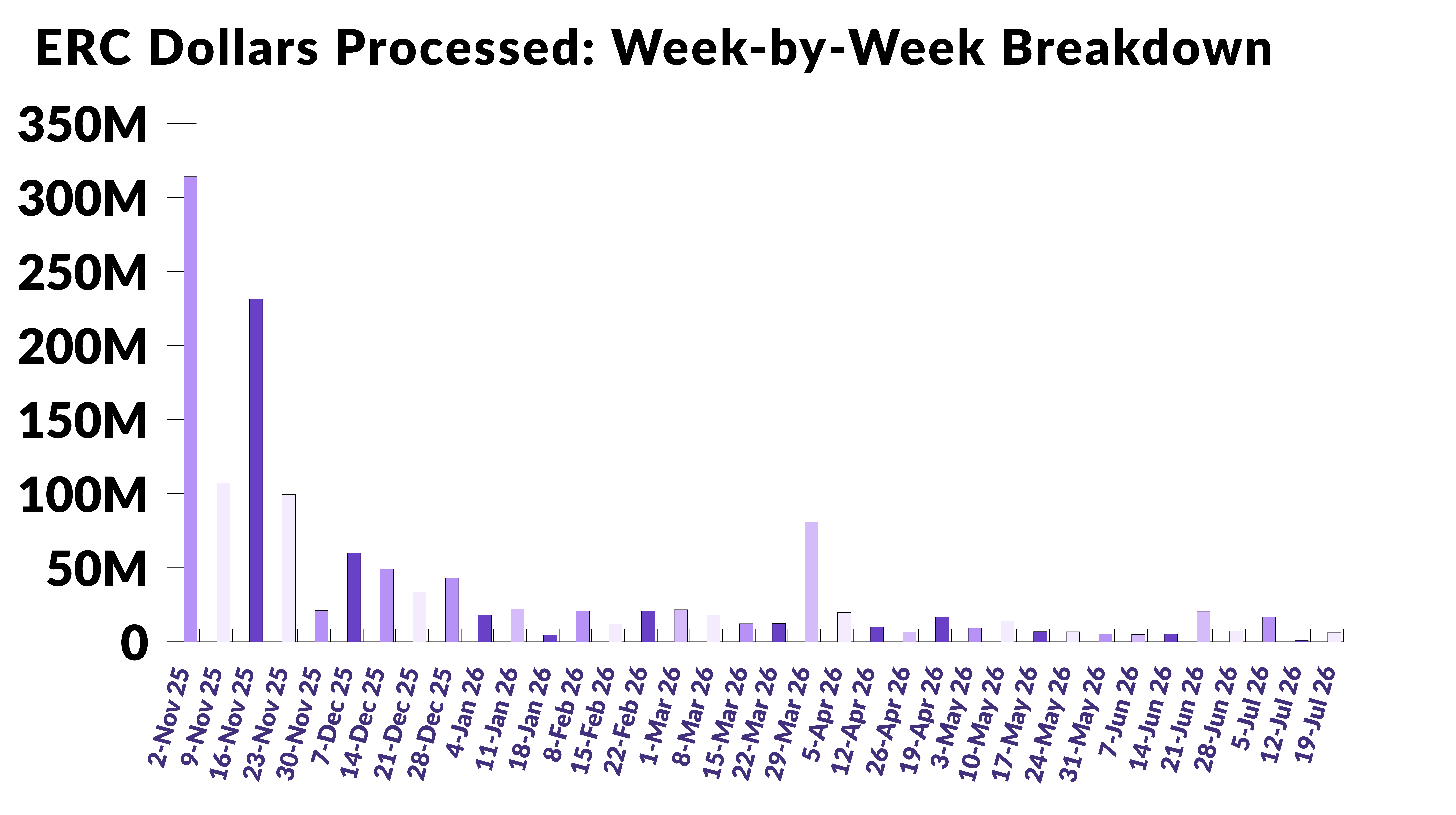
The IRS’ latest numbers confirm the lion’s share of remaining ERC inventory is now in audit or post-disallowance channels.
That distinction matters. A taxpayer waiting on an initial refund is in a very different position than one who received a Letter 105-C in July 2024 and is approaching the two-year deadline to file suit.
That deadline is becoming harder to ignore. Filing an administrative appeal does not extend the two-year period, and the CP320B/Form 907 extension process only works if the IRS countersigns Form 907 before the deadline expires.
Unfortunately, we are still hearing of reported situations where the IRS’ “streamlined” Form 907 process is simply not producing the intended results. For taxpayers in this situation, a protective refund suit may be the only way to preserve the claim.
Taxpayers also received a small, but mighty procedural win this week in Region IV Mental Health Services v. United States. The government argued the case should be dismissed because the complaint did not connect every government order to every business disruption with enough detail.
The court rejected that argument, holding that taxpayers do not need to plead that level of detail at the start of a refund lawsuit. Whether government orders actually caused a qualifying suspension is a factual issue for later.
This is not a major triumph on ERC eligibility, but it may signal a budding taxpayer-friendly trend at the pleading stage.
At that pace, the remaining inventory would take more than three years to clear. For taxpayers already holding 105-C letters, that delay creates a separate and urgent statute-of-limitations problem.
The ERC story remains squarely focused on processing delays and dispute management. For some taxpayers, the question is, “When will I get paid?” For others, it is now, “How do I preserve my rights before the deadline expires?”
Do not confuse silence with safety. If the clock is running, waiting may be the biggest risk.
Disclaimer: *𝘋𝘢𝘵𝘢 𝘴𝘦𝘵 𝘪𝘴 𝘧𝘳𝘰𝘮 𝘢𝘱𝘱𝘳𝘰𝘹𝘪𝘮𝘢𝘵𝘦𝘭𝘺 15,000 𝘣𝘶𝘴𝘪𝘯𝘦𝘴𝘴𝘦𝘴 𝘵𝘳𝘢𝘤𝘬𝘪𝘯𝘨 𝘌𝘙𝘊*

