


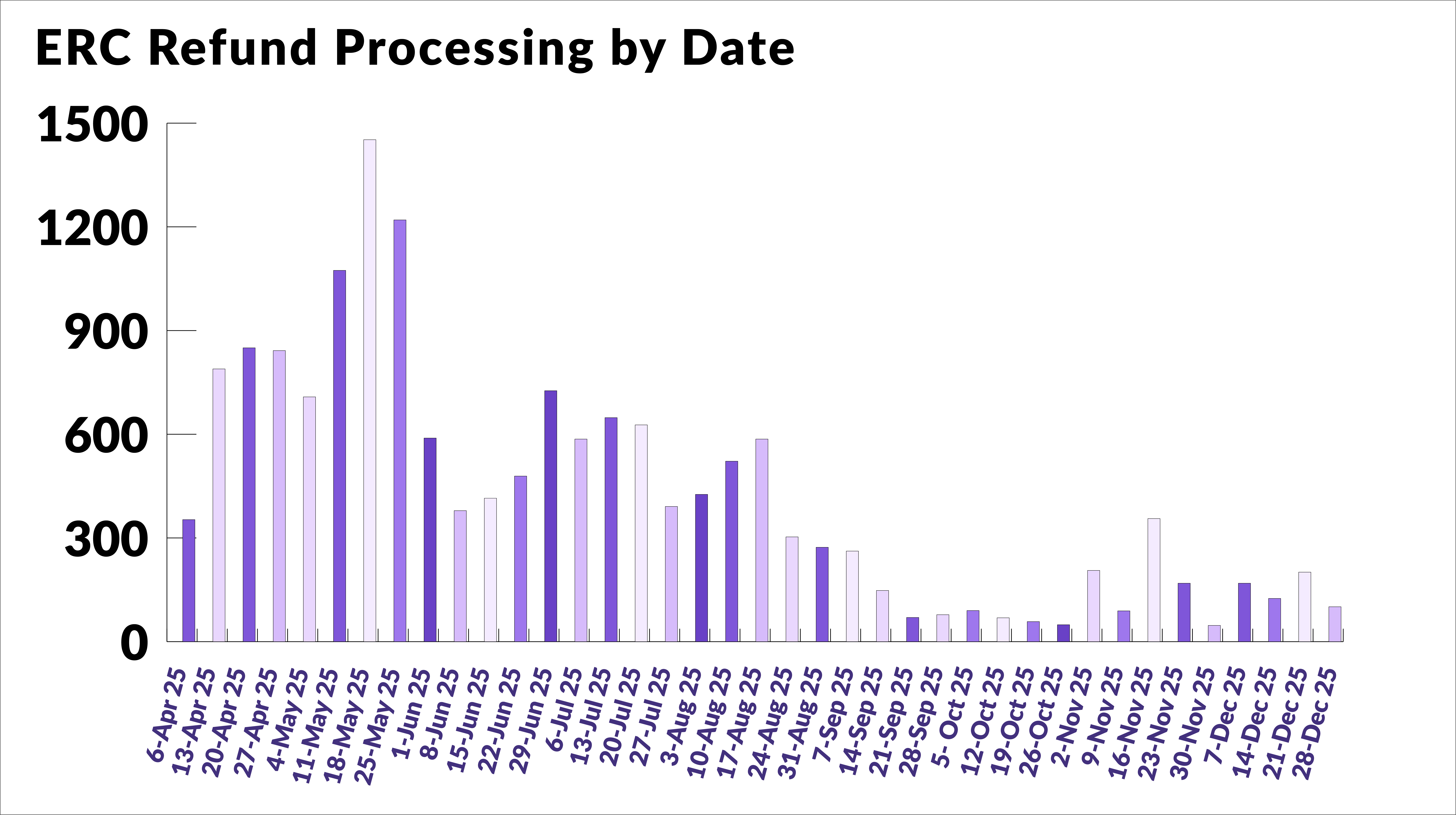
After a brief lull tied to the IRS’s “transcript freeze” (which lasted roughly two weeks), we’re seeing a modest rebound in refund volume heading into early February. The most recent refund processing date (February 9th) brought 141 refunds, meaningfully up from the 40 refunds seen on January 19th (one of the lowest processing days on record), though still far from impressive when compared to activity in the latter half of 2025.
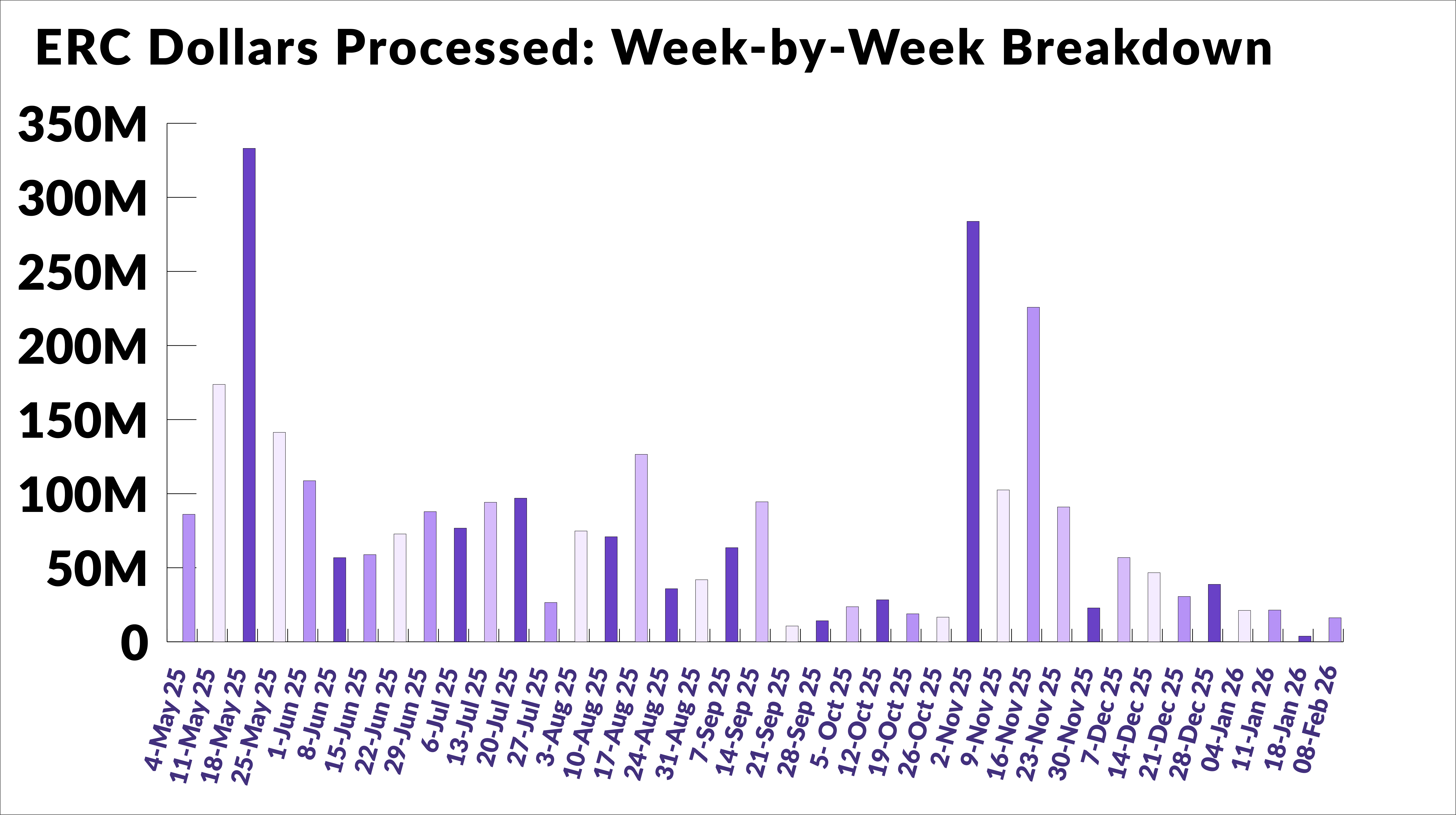
While refund counts have climbed, average refund size remains modest at $115,020, resulting in $16.2M in total refund volume for the period. Average days from filing to refund was 707 days (or 1.93 years), the longest in TaxNow history. This pattern suggests the IRS may still be chipping away at smaller, older claims (many with procedural issues) before turning back to the larger, more complex inventory.
On the enforcement front, we did not see any meaningful activity on new full or partial denials (105C/106C) over the most recent transcript cycle. However, we have noticed the IRS appears to be more actively working Form 911 requests (refund replacements), as well as “stuck” refunds; cases where an overpayment has been processed, but a refund was never issued.
We’ve also heard reports of ongoing follow-up requests tied to certain correspondence audits, suggesting the IRS is beginning to work through the stale inventory of examinations that accumulated during the summer 2025 “audit frenzy.” On the PEO front, there continues to be positive traction in isolated pockets, though the majority of PEO claims remain stale. Finally, we continue to monitor the two-year shot clock on 105C denials that began in summer 2024 and hope the IRS’s process around statute extensions (via Form 907) improves materially as those deadlines approach.
Total Refunds: 141
Total Dollar Volume: $16.2M
Average Refund: $115,020
Average Days from Filing to Refund: 707 (the longest on record!)
Denials: 12
Audits:No new audits in all of January!
TaxNow's Take:
After a brief operational pause, IRS refund processing has resumed, but momentum remains limited. Activity suggests the IRS is focused on clearing procedural and lower-complexity issues rather than meaningfully reducing the broader ERC backlog or tackling more complex issues such as exams and denials head-on. Enforcement pressure appears steady for now, while timing risk, particularly around older denials, audits, and PEO claims, remains the primary variable to watch as we move deeper into 2026.
Signing off!
Kenny Dettman, CPA
Disclaimer: *𝘋𝘢𝘵𝘢 𝘴𝘦𝘵 𝘪𝘴 𝘧𝘳𝘰𝘮 𝘢𝘱𝘱𝘳𝘰𝘹𝘪𝘮𝘢𝘵𝘦𝘭𝘺 15,000 𝘣𝘶𝘴𝘪𝘯𝘦𝘴𝘴𝘦𝘴 𝘵𝘳𝘢𝘤𝘬𝘪𝘯𝘨 𝘌𝘙𝘊*

